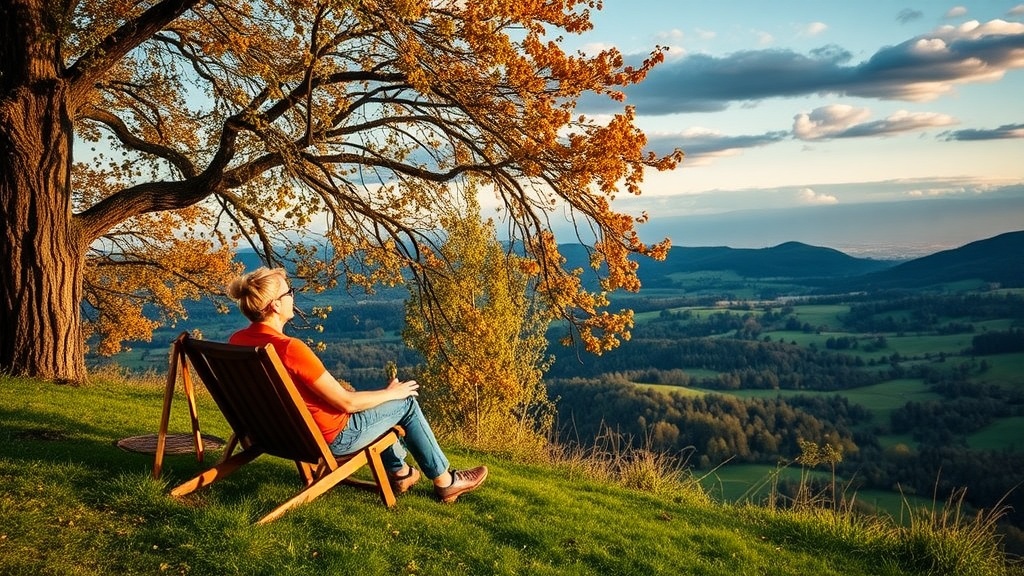
Can You Actually Relax in the Countryside with a Packed Schedule?

Why Do We Over-Schedule Rural Vacations?
You've finally escaped the city—booked that cottage in the Cotswolds, reserved a table at the farm-to-table restaurant everyone mentions, mapped out three walking trails, and scheduled visits to two vineyards and a cheese maker. Sound familiar? The irony isn't lost on most travelers: we flee urban chaos only to replicate its frantic pace in bucolic settings. There's something about precious time away that triggers a scarcity mindset—if we don't squeeze in every recommended experience, haven't we somehow failed?
The countryside doesn't reward this approach. Rural destinations operate on rhythms entirely different from cities. Shops close for lunch. Buses run twice daily. That "quick detour" to a viewpoint adds ninety minutes of narrow lane driving. When your itinerary lacks breathing room, you're not experiencing a place—you're enduring it. The stress of running late for your third activity of the morning eclipses whatever charm the first two might have held.
How Much Can You Realistically See in a Rural Week?
The honest answer: far less than you think, and that's perfectly acceptable. A sustainable rural itinerary includes one major activity per day—maybe two if they're geographically adjacent and low-effort. Everything else is padding, contingency, or (better yet) unstructured time. This isn't laziness; it's recognition that rural travel involves variables urban travelers rarely confront. That "twenty-minute" drive becomes an hour when you encounter sheep being moved along the road. The trail you planned takes longer because—you'll realize this with delight—you keep stopping to photograph wildflowers or chat with a fellow walker.
Consider the mathematics of rural movement. In cities, we calculate transit in minutes and blocks. In the countryside, distance becomes less relevant than conditions. Ten miles on a winding B-road through Cornwall demands more attention and time than thirty miles on a motorway. Parking in villages with medieval street plans requires creativity and patience. These aren't obstacles to overcome through efficiency—they're characteristics of the experience itself. Fighting them creates frustration; accommodating them creates space for discovery.
When planning your daily structure, employ what experienced rural travelers call the "anchor and drift" method. Choose one anchor activity—something with a reservation, a specific opening time, or genuine importance to you. Build your day around protecting that experience with adequate time and reasonable energy levels. Everything else becomes drift: optional, discoverable, disposable if the morning unfolds differently than anticipated. This approach requires surrendering the illusion of control that detailed itineraries provide, but it gains you something more valuable—the capacity to say yes when interesting opportunities emerge.
What Should You Cut From Your Itinerary First?
Start with anything that involves backtracking. Rural regions—particularly in Europe—often feature linear geography: valleys, coastlines, river corridors. The most exhausting itineraries zigzag repeatedly across these natural patterns. If your route map resembles a child's scribble, you're spending your vacation in transit rather than place. Consolidate geographically. Accept that seeing everything listed in that guidebook requires either more time or less territory.
Next, eliminate "aspirational" activities—the ones you feel you should want to do rather than genuinely desiring them. That three-hour round-trip to a famous viewpoint when you're not particularly passionate about photography? Cut it. The "authentic" cooking class when you actually prefer eating out? Remove it. These obligations drain energy without delivering satisfaction. Rural travel's greatest gift is authenticity through alignment—matching your actual interests with the experiences available, not performing vacation for imagined audiences.
Finally, reduce your accommodation changes. Every transfer day consumes disproportionate mental and physical resources. Packing, checking out, handling to the next location, checking in, orienting yourself—these tasks fragment your attention and compress your available time. A week-long rural vacation benefits enormously from a single base, or at most two if your interests genuinely span different regions. The apparent convenience of "seeing more" by staying in three locations often costs you the depth that makes rural travel memorable.
Consider consulting resources like The National Trust for understanding how rural heritage sites operate, or Visit Cornwall for regional timing realities that guidebooks often gloss over. The Ramblers Association provides excellent guidance on realistic walking paces and trail conditions that first-time rural travelers frequently underestimate.
How Do You Build in Recovery Time?
The concept of "recovery" suggests something's gone wrong, but in rural vacation planning, it's preventive architecture. Schedule deliberate nothing—afternoons with no plans, mornings without alarms, entire days designated as "local wandering." This isn't wasted time; it's when the countryside actually reaches you. The conversation with the pub landlord about local history. The unexpected garden open day you stumble upon. The extended lunch that stretches into evening because the weather turned glorious and the wine was local.
Experienced rural travelers often adopt a pattern of active and restorative days. Follow a demanding hike with a village exploration day—gentle walking, café sitting, perhaps a short drive to a nearby market. After an ambitious excursion requiring early departure, grant yourself a sleep-in morning and late breakfast. These rhythms mirror how rural life actually functions; they aren't accommodations to weakness but alignment with place.
Pay attention to transition costs, too. Arrival days deserve minimal scheduling—you're disoriented, possibly jet-lagged, certainly unfamiliar with local logistics. Departure days similarly warrant simplicity. The middle days carry your ambition, but even these benefit from explicit breaks. Build in siesta periods if traveling in Mediterranean climates. Plan indoor alternatives for weather-dependent regions. The countryside doesn't pause for your itinerary; constructing flexibility acknowledges this reality with grace rather than frustration.
Can Slow Planning Actually Improve Your Experience?
Deliberate under-scheduling feels counterintuitive, almost irresponsible. We've been conditioned to maximize, optimize, extract full value from every investment. But rural travel operates on different economics. The value isn't in quantity of sites visited but quality of presence achieved. A week with four well-chosen, unhurried experiences outperforms one with twelve checked boxes and frazzled nerves.
This approach requires pre-trip research that might seem excessive—understanding opening patterns, seasonal variations, local events that might affect availability. But this preparation liberates you during the trip itself. When you know that Tuesday market determines the week's rhythm in your village, you don't schedule against it; you build around it. When you understand that October afternoons shorten rapidly in northern latitudes, you don't plan ambitious late hikes. Good rural itineraries are built on respect for local temporal geography.
The best rural vacations often leave you with stories about things you didn't plan—the farm shop discovered during a wrong turn, the village fete encountered by accident, the extended conversation that started with asking directions. These require temporal slack, uncommitted hours that allow serendipity to operate. You cannot schedule spontaneity, but you can construct conditions where it becomes possible. That's the real art of rural itinerary planning: not filling time, but framing it.