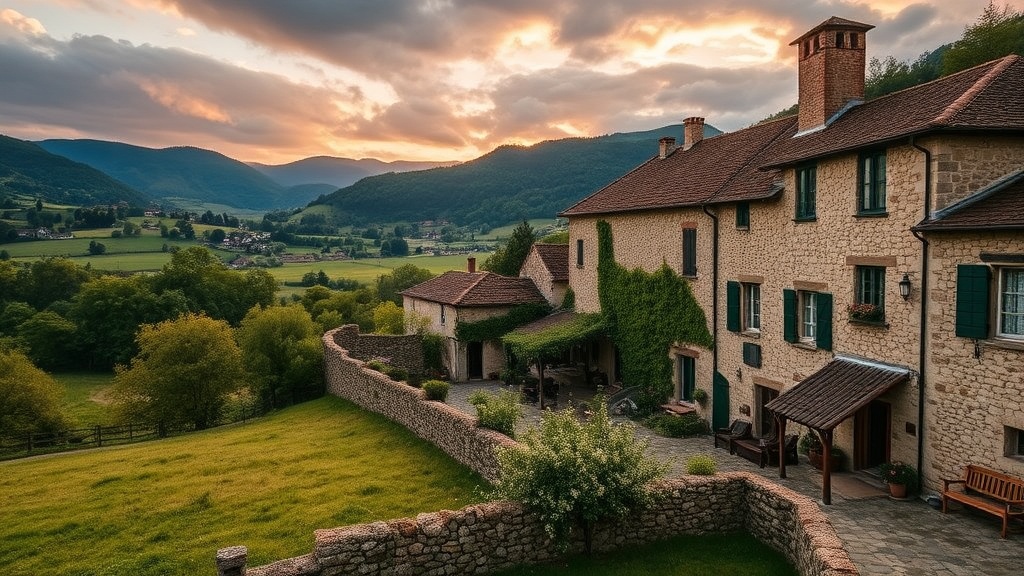
Hidden Village Escapes: Discovering Europe's Most Picturesque Countryside Retreats
This post covers Europe's most enchanting hidden villages—those untouched pockets of countryside charm that mainstream tourism has somehow overlooked. You'll discover where to find authentic stone cottages in France's Dordogne Valley, medieval hamlets tucked into Italy's hillsides, and fairytale towns along Portugal's rural backroads. Whether planning a slow-travel retreat or seeking a base for regional exploration, these villages offer something the guidebooks rarely capture: genuine character, reasonable prices, and the kind of peace that city breaks simply can't deliver.
What Makes a Village "Hidden" in 2026?
A truly hidden village lacks train stations, cruise ship docks, and those omnipresent selfie-stick souvenir shops. These are places where locals still outnumber visitors, where the baker knows everyone's name, and where dinner requires reservations not because it's trendy—but because there's only one restaurant and twelve tables.
The criteria? No more than 2,000 residents. No direct flights from London or Frankfurt. No TripAdvisor "Top 10" badges plastered on every door. Instead, you'll find:
- Unspoiled architecture — stone farmhouses, wooden shutters, terracotta roofs that haven't been "restored" into hotel lobbies
- Working economies — actual farmers, cheesemakers, and craftspeople rather than souvenir hawkers
- Limited accommodation — perhaps a handful of guesthouses or Airbnb properties, but no Hilton Garden Inns
- Seasonal rhythm — these places slow down in winter; some restaurants close entirely in January
Worth noting: "hidden" doesn't mean inaccessible. Most of these villages sit within 90 minutes of a major city or regional airport. The trick is knowing which rental car to book (a Fiat 500 handles Italian country roads far better than a bulky SUV) and which backroads to follow.
Which French Villages Offer the Most Authentic Dordogne Experience?
Beynac-et-Cazenac, Saint-Léon-sur-Vézère, and Limeuil deliver the quintessential Périgord experience without the coach-bus crowds that swarm Sarlat-la-Canéda each summer.
Beynac clings to a limestone cliff above the Dordogne River—its château (featured in the 2000 film Chocolat) dominates the skyline. But here's the thing: visit in late September when the walnut harvest begins, and you'll find the village nearly empty. Stay at Le Bristol Paris's sister property, La Chartreuse du Bignac, a 15-minute drive away—though honestly, the family-run Château de la Fleunie offers better value at €120 per night including breakfast.
Saint-Léon-sur-Vézère sits at a river bend where the Vézère meets a small tributary. There's one boulangerie (Boulangerie Pâtisserie Faurie—arrive before 9 AM for the walnut bread), one restaurant (Le Petit Léon, seasonal menu around €45), and a 12th-century church with extraordinary Romanesque carvings. The catch? No grocery store. Stock up at the Intermarché in Montignac-Lascaux, twenty minutes north.
Limeuil—where the Dordogne and Vézère rivers converge—offers riverside beaches (pebbly, but swimmable in July and August) and a small botanical garden overlooking the water. Stay in one of the stone houses available through Gîtes de France, the country's official rural accommodation network. Expect to pay €600-800 weekly for a two-bedroom cottage with kitchen and terrace.
The Practicalities of Dordogne Slow Travel
Base yourself in one village for at least five nights. Day trips should radiate outward—Lascaux IV (the replica cave, absolutely worth the €17 admission), the market at Saint-Cyprien (Sundays), and the goose farms around Souillac where you can buy confit de canard directly from producers.
Rent a car through Europcar at Brive-Souillac Airport (seasonal flights from London City) or take the train to Souillac and collect a vehicle there. The roads are narrow—really narrow. You'll develop new skills handling around hay trucks and the occasional wandering goat.
Where Can You Find Italy's Most Photogenic Hill Towns Without the Crowds?
Castelluccio di Norcia in Umbria, Civita di Bagnoregio in northern Lazio, and Montemerano in southern Tuscany offer that postcard-perfect Italian village experience—minus the tour groups that choke Pienza and San Gimignano.
Castelluccio sits on the Piano Grande, a vast high plain famous for its wildflower bloom (la fioritura) each June and July. The village itself—population 127—perches above the plain at 1,452 meters. Accommodation is limited: try Locanda de' Senari, a simple guesthouse with staggering views, or rent the stone cottage advertised through Slow Travel Italy. The lentils grown here (lenticchie di Castelluccio) fetch premium prices in Rome's gourmet shops—buy them directly from the cooperative shop for €8 per kilo rather than €25 in the capital.
Civita di Bagnoregio—"the dying city"—connects to the mainland by a single pedestrian bridge. Erosion isolates it further each year. Wake early (before 8 AM) to experience the village alone—the early light on the tufa stone buildings is extraordinary. Stay in nearby Lubriano at Albergo Diffuso Civita, a "scattered hotel" where rooms occupy restored medieval buildings throughout the village. Rates start around €90 nightly.
Montemerano, south of Grosseto, surrounds a thermal hot spring area (Saturnia's famous cascades lie ten minutes away) but itself remains remarkably untouristed. The village is entirely pedestrian—park at the entrance and walk. Osteria La Canonica serves exceptional pici al ragù (hand-rolled pasta with wild boar sauce) for around €14. The owners, Marco and Elena, will likely spend twenty minutes explaining the wine list—it's not upselling, it's genuine enthusiasm.
Comparing Italy's Hidden Hill Towns
| Village | Region | Best For | Base Nightly Rate | Peak Season |
|---|---|---|---|---|
| Castelluccio di Norcia | Umbria | Hiking, photography, solitude | €70-100 | June-July (wildflowers) |
| Civita di Bagnoregio | Lazio | Architecture, history, unique stays | €90-130 | May, September |
| Montemerano | Tuscany | Food, thermal springs, accessibility | €80-120 | April-June, September-October |
What About Portugal's Undiscovered Rural Gems?
The villages of Trás-os-Montes and the Beira Interior regions offer perhaps Europe's best value proposition—stunning stone architecture, exceptional food, and accommodation at half the cost of better-known destinations.
Monsanto, in the Beira Baixa region, climbs a steep granite hillside. Houses squeeze between massive boulders—some buildings actually incorporate the rock into their walls. The village received a "most Portuguese village" award in 1938 (there was a competition, apparently) and promptly ignored subsequent tourism development. Stay at Casa de São Pedro, a simple guesthouse with stone walls two feet thick. Dinner at Taverna Lusitana features bucho recheado (stuffed pig stomach)—an acquired taste, admittedly, but the bacalhau à brás (salt cod with eggs and potatoes) satisfies less adventurous palates.
Piódão, in the Serra do Açor, presents a amphitheater of schist stone houses cascading down a valley. The narrow streets require serious calf muscles—pack comfortable walking shoes (Merrell Moab 3s handle the cobbles well). There's limited accommodation; book Casa da Padaria months ahead, or stay in nearby Arganil and drive up for day visits.
In Trás-os-Montes (literally "beyond the mountains"), the village of Rio de Onor straddles the Spanish border—half the village is Portuguese, half Spanish, though everyone speaks both languages plus the local Portuñol dialect. The joint church (shared between countries) celebrates mass alternating weeks in each language. This is remote country—expect three hours driving from Porto—but the Mirandese beef and smoked sausages justify the path. The local posto de turismo (tourist office) consists of a single room above the café; the proprietor, Senhor António, has handwritten maps and opinions about everything.
When to Visit These Portuguese Villages
Spring (April-May) brings wildflowers and comfortable temperatures. Autumn (September-October) offers harvest festivals—grape stomping in the Douro Valley, chestnut roasting in Marvão. Winter? Beautiful but isolated. Snow closes mountain passes; some guesthouses shutter entirely from November through February.
The Beira Interior region, including Monsanto and Piódão, now connects via improved highways to Lisbon and Porto—figure three hours driving from either city. Trás-os-Montes remains genuinely remote; consider flying into Vila Real's small airport (limited seasonal service) or committing to the scenic drive.
How Do You Actually Plan a Stay in These Places?
Booking accommodation requires different strategies than standard hotel reservations. Many properties lack online presence entirely.
- Use specialized platforms — Gîtes de France for France, Agriturismo.it for Italian farm stays, and Turismo de Portugal's rural tourism portal. Airbnb works for some properties, but expect a 20-30% markup over direct booking.
- Email the local tourist office — old-fashioned, yes, but the staff at offices in Sarlat, Orvieto, or Castelo Branco maintain lists of rental properties that never appear online. Response times vary; follow up after five days.
- Consider shoulder season — prices drop 30-40% in late September and early May. Weather remains pleasant; crowds evaporate.
- Plan for limited services — grocery stores in these villages often close Sundays and Wednesday afternoons. ATMs may not exist. Download offline maps; mobile coverage can be spotty.
The reality of hidden village travel? It's slower. Meals take longer. Shops close unexpectedly. You'll spend an afternoon watching sheep cross the road rather than checking off sightseeing lists. That said, there's profound satisfaction in mastering the rhythms of a place where time hasn't accelerated to metropolitan speeds.
"The best villages aren't found—they're revealed. You turn a corner on a country road, and suddenly there's a stone tower, a café with three tables, and an old man who wants to explain why this particular valley produces Europe's finest walnuts. That's the discovery worth traveling for."
Pack light but pack smart. Comfortable shoes (those cobbles are unforgiving). A phrase book—English proficiency drops off precipitously in rural France and Portugal. A willingness to eat whatever's served (dietary restrictions require advance planning in villages with single restaurants). And patience. Lots of patience.
The hidden villages of Europe aren't hiding from you—they're simply waiting for travelers who value authenticity over convenience, character over luxury, and the slow revelation of a place that hasn't packaged itself for mass consumption.