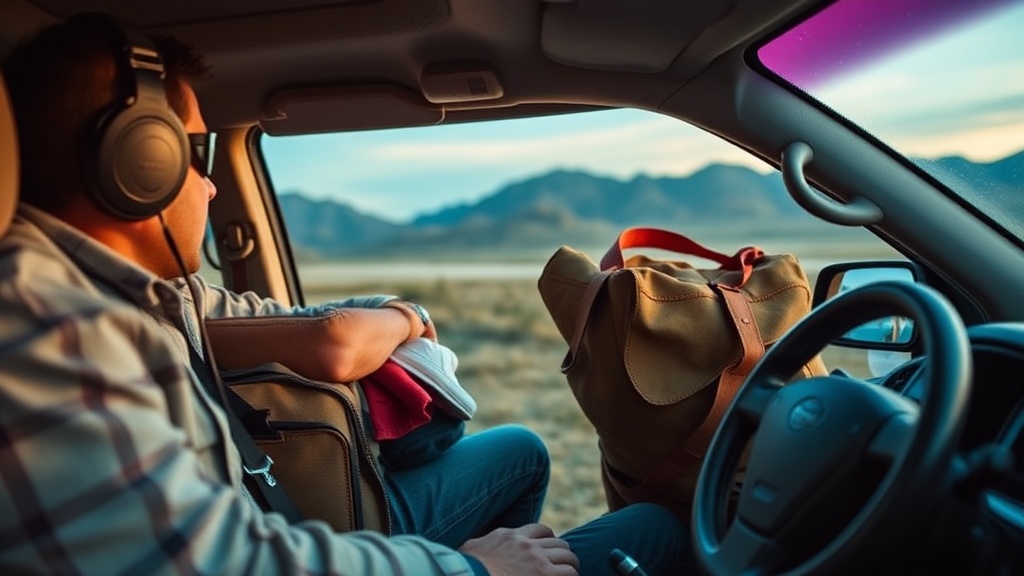
Organizing Your Rural Packing List for Long-Distance Drives

Most travelers assume that a well-packed suitcase is the key to a successful trip, but when you're heading into the countryside, your car's trunk is actually your most important piece of luggage. People often focus on what they'll wear once they arrive, forgetting that the transit period—the hours spent on winding backroads or through mountain passes—dictates the mood of the entire excursion. A poorly organized vehicle leads to frantic searching at a roadside gas station or, worse, a missed sunset because you couldn't find your camera in a cluttered backseat.
This guide focuses on the logistics of the transit itself. It covers how to organize your gear, what to keep within arm's reach, and how to prepare for the unpredictable nature of rural travel. Whether you're driving through the Scottish Highlands or the rolling hills of the Appalachian Mountains, the way you pack your vehicle determines if you're actually enjoying the view or stuck wrestling with a heavy bin in a cramped parking lot.
What should I keep in my car for a long drive?
The biggest mistake people make is stowing everything in the trunk and treating the car like a moving storage unit. You need a tiered system. Think of your car in zones: the driver's reach, the passenger's reach, and the deep storage (the trunk).
The first zone—the one within arm's reach—should contain items that satisfy immediate needs. This includes a physical map (even if you use GPS, signal drops in rural areas are a reality), a reusable water bottle, and a small kit of snacks. Avoid messy foods; you don't want crumbs or sticky residue on your upholstery. A high-quality power bank and a dedicated charging cable for your phone are also non-negotiable. If you're driving through remote areas, you might find that phone reception is spotty, making a physical map or downloaded offline maps a lifesaver.
The second zone—the backseat or the middle console—is for items you might need frequently but not constantly. This is where your camera, a light jacket, and perhaps a book or a notebook belong. If you're a photographer, having your camera in a small, padded bag right next to you—rather than buried in a backpack—prevents you from missing that sudden light change in a valley.
The third zone is the trunk. This is for the heavy, bulky, and rarely used items. Your large suitcase, your hiking boots, and your full-sized toiletry kit stay here. To keep things from sliding around, use soft-sided duffel bags instead of hard-shell suitcases. They conform to the shape of your trunk and are much easier to stack. If you have a lot of loose gear, consider a dedicated car organizer—a small bin or a hanging organizer can keep small essentials from becoming a pile of chaos on the floorboards.
How do I pack for unpredictable weather changes?
Rural weather doesn't follow the rules of city forecasts. A sunny morning in a valley can turn into a misty, chilling afternoon by the time you hit the ridge. The key is the "layering system" applied to your car organization. Instead of packing one heavy coat, pack several lightweight, functional layers.
I always recommend keeping a "weather kit" in a small, waterproof bag in the passenger footwell. This kit should include:
- A compact, high-quality umbrella or a lightweight raincoat.
- A pair of extra wool socks (nothing ruins a drive like damp feet).
- A lightweight scarf or shawl.
- Sunscreen and sunglasses (even if it looks cloudy, UV rays are high in higher altitudes).
If you're traveling through regions known for sudden shifts, such as the areas around The Met Office in the UK or high-altitude regions in the US, your ability to adapt quickly is your best asset. A sudden downpour shouldn't mean you have to pull over and dig through five bags to find a raincoat.
Is it better to use bags or hard suitcases for road trips?
For most countryside excursions, soft-sided duffel bags are the superior choice. Hard-shell suitcases are great for protecting electronics, but they are incredibly inefficient in a car. They create dead space in your trunk and are difficult to stack. In contrast, duffels can be squished into corners, maximizing every inch of your vehicle's storage.
If you must bring fragile items, use a small, hard-shell case for those specific goods, but keep the bulk of your clothing in soft bags. This flexibility is vital when you're handling narrow, winding roads where you might need to quickly access a bag to grab a change of clothes or a snack without unpacking the entire car.
One way to stay organized is to use the "packing cube" method. Rather than having one giant bag of clothes, divide your belongings into smaller, labeled pouches. One for tops, one for bottoms, and one for accessories. This way, if you're staying in a small cottage or a B&B with limited space, you can easily move your belongings from the car to the room without a massive mess.
Finally, don't forget the importance of a small, dedicated "trash bag." It sounds trivial, but once you've been driving through beautiful landscapes for six hours, a pile of empty water bottles and snack wrappers in your cup holder can make the experience feel cluttered and uninspired. A small, collapsible trash bin or even a simple grocery bag tucked into a side pocket keeps your environment clean and your mind focused on the scenery.
Spend more time looking at the hills and less time looking for your charger. A little bit of preparation in the driveway can save hours of frustration on the road.