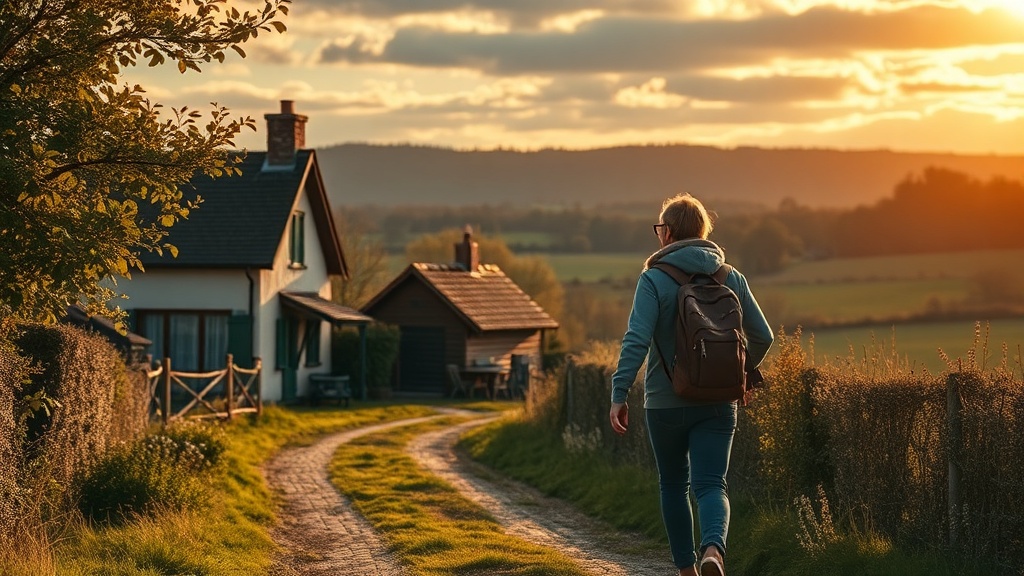
Why One Good Village Base Beats Constant Check-Ins on a Countryside Trip

At 5:40 p.m., you finally roll into a stone-built village after a day of slow bends, hedge-lined lanes, and one farm tractor that seemed determined to travel at the speed of thought. The pub kitchen stops at six, your room key is in an envelope, and you still have to repack because tomorrow's bed is somewhere else. This is where a lot of countryside trips go wrong. They mistake movement for depth. This piece lays out when staying in one village for several nights works better than changing rooms every day, and why that choice usually gives you calmer mornings, better meals, and more time outside the car.
The countryside has a way of making short distances feel longer than they look on a map. A 25-mile hop can take the better part of an hour, and the lost time isn't only on the road. It's in the check-out deadline, the awkward hour before check-in, the parking guesswork, and the mental drag of never quite settling. If you've ever come home from a rural break feeling oddly rushed, there's a fair chance the problem wasn't the place. It was the pace.
Is it better to change hotels every night in the countryside?
Most of the time, no. In cities, changing hotels can be annoying but manageable because transport is frequent, meals run late, and there is usually a coffee shop waiting at the other end. In the countryside, every move has a bigger cost. Roads are narrower, daylight matters more, and small businesses often keep shorter hours. Official UK road advice from THINK is blunt about country roads: bends, blind summits, hidden entrances, and fatigue all matter. That doesn't mean rural driving is hard; it means a packed room-to-room schedule is usually built on fantasy time.
One base gives you something city breaks rarely need: slack. If rain wipes out your morning walk, you can swap plans and head to a market town after lunch. If dinner runs long, you don't start worrying about tomorrow's check-in window. If a path turns out to be better than expected, you can stay out longer. That kind of freedom is worth more than the tiny thrill of waking up somewhere new every morning.
There's also the matter of attention. On a rushed trip, villages become background. You notice whether they have parking, not whether the bakery sells out by nine or which footpath catches the last light. Stay put, and the place starts to open a little. You learn the shape of the square, the quiet lane behind the church, the shop that looks closed but isn't, and the field edge where people walk their dogs at dusk. That's the difference between passing through and actually being there.
| Style | What you gain | What you give up |
|---|---|---|
| One village base | Longer walks, easier dinners, weather flexibility, less packing | Fewer brag-worthy pins on the map |
| Nightly moves | More geographic range, novelty, easier point-to-point routes | Admin time, missed openings, more driving at tired hours |
How many nights should you stay in one village?
For most countryside breaks, three nights is the sweet spot. Two nights can work, but it often feels like one full day bracketed by luggage. Three nights gives you an arrival evening, two proper days, and a final morning that doesn't feel stolen. Four nights is even better when the weather is mixed or when you're using one village to reach several nearby areas. You get one slower day almost by accident — and that's usually the day people remember.
If your trip is only a weekend, I'd still lean toward one base rather than trying to sample two. If you have five to seven nights, two bases can make sense, especially if they serve clearly different purposes: one for walks and quiet, another for coast, gardens, or market towns. What doesn't work well is the tempting middle ground where every day includes a small move. That's the version that looks efficient in a notebook and feels thin in real life.
If you've booked more beds than dinners, you're probably moving too often.
What makes a good countryside base?
The prettiest village isn't always the best base. What you want is a place that still works at 8:30 p.m., in drizzle, when you don't feel like driving again. Start with walkability. Can you step out for a short loop without getting back in the car? A base near waymarked routes or official trail information helps; the National Trails site is useful for checking walking options and nearby services before you book.
- One reliable place to eat within walking distance. Not a famous table booked three months ahead — just somewhere you can reach without planning your evening around the car.
- Parking that isn't theoretical. Ask whether the space is on-site, nearby, steep, shared, or first-come first-served. Rural parking descriptions can be optimistic.
- A 30 to 45 minute ring of options. You want several worthwhile stops close enough for a half day: a walk, a garden, a market town, a historic house, a good lunch.
- A bad-weather fallback. One rainy-day plan is enough. A decent museum, spa, bookshop town, or long lunch room can save the whole stay.
- Low-friction arrival. Simple directions matter more than charm when you're arriving late. If phone signal is patchy (and it often is), printed details still earn their keep.
One more thing: don't confuse remoteness with peace. Some very small places are quiet only after the day-trippers leave, while a slightly larger village with a shop, pub, and bus stop can feel much easier to inhabit. You're not choosing a postcard. You're choosing a base camp.
When does moving every night make sense?
There are good reasons to keep moving. A point-to-point walking trip is the clearest one. If you're following a section of a long route, sleeping where you finish is part of the logic of the trip. The same goes for a broad crossing where the drive itself is the point — say, linking several rural regions that are too far apart to sensibly reach from one base.
Nightly moves can also work when your days are tightly defined in advance: one vineyard visit here, one ferry there, one house opening at a fixed hour somewhere else. But be honest about what kind of holiday you've built. That's an itinerary-led trip, not a loose countryside stay. There's nothing wrong with that. It just asks more of you. If what you really want is room to wander, stop pretending movement will create that feeling. It usually does the reverse.
What should you book before you arrive?
Book the room, the first dinner, and one anchor activity. That's enough structure for most stays. The first dinner matters because rural kitchens often stop earlier than city travelers expect, and the first evening is when low blood sugar makes every lane feel longer. Your anchor activity can be a walk with a clear trailhead, a garden entry, or a lunch worth planning around. Leave the rest loose.
Before you go, read the local parking notes carefully and skim the Countryside Code. It isn't busywork. In practical terms, it means don't block gateways, don't assume every field edge is yours to wander across, and don't turn a quiet lane into your own loading zone while you debate where the bags should go. Respect for working villages shows up in small choices.
I also like a simple arrival checklist: confirm the latest check-in time, save the host's phone number, screenshot directions, note where breakfast starts, and identify one low-effort outing for the first morning. That first morning sets the tone. If you wake up knowing there's a good loop, a bakery, or even just a bench with a view five minutes away, the trip settles almost immediately. You stop treating the countryside like a route to finish and start letting the place set the pace — which, more often than not, was the reason for leaving home in the first place.