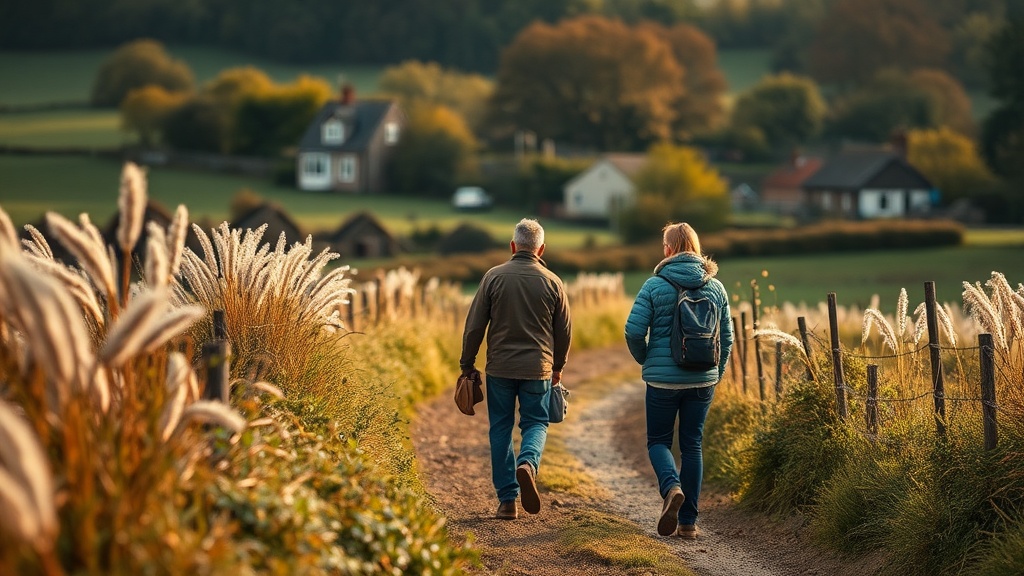
Why Trying to 'Live Like a Local' Undermines Your Countryside Experience

There's a pervasive myth in travel circles that the best way to experience a destination is to somehow infiltrate it as a temporary resident—to shop where residents shop, eat where they eat, and avoid anything that smacks of tourism like some kind of embarrassing secret. This advice, repeated endlessly in travel blogs and glossy magazines, sounds sophisticated. It promises authenticity. But when you're standing in a rural village in the Cotswolds or a vineyard region in Portugal, trying to "live like a local" is not only unrealistic—it's a recipe for missed opportunities and unnecessary stress. The truth is more liberating: you are a visitor, and that's not just okay—it's something to embrace.
Consider what this advice actually asks of you. It suggests that a week-long stay in a countryside cottage qualifies you to understand the rhythms of a place that locals have spent years, often generations, building. It implies that their daily routines—the commute to work, the grocery run, the evening television—represent the "real" experience you should chase. But here's the uncomfortable reality: most locals in beautiful rural areas aren't spending their weekends hiking the scenic trails or dining at the historic pub. They're living their lives. And while there's nothing wrong with observing local life, mistaking it for your vacation purpose creates a fundamental confusion about why you traveled in the first place.
What Does "Living Like a Local" Actually Mean in Rural Destinations?
The phrase gets thrown around so casually that it's worth interrogating what people actually mean by it. In urban contexts, it might involve finding neighborhood cafes away from the main squares or shopping at markets instead of tourist boutiques. But in rural areas—where the distinction between "local life" and "visitor experience" is often starker—the advice becomes genuinely confusing. Are you supposed to attend the parish council meeting? Help with the harvest? Spend your afternoon at the agricultural supply store?
Rural communities operate on different scales than cities. The "local experience" often involves drives to regional centers for necessities, evenings at home, and social connections built over decades. The pub that's charming for a visitor on holiday is someone's actual neighborhood bar—the place where they decompress after work, not where they seek entertainment. When travelers attempt to insert themselves into these spaces as if they belong, the result isn't authentic connection; it's often awkwardness for everyone involved. The farmer at the bar doesn't necessarily want to explain his livelihood to curious tourists every evening, however well-meaning.
This isn't to say that meaningful exchange between visitors and residents is impossible—far from it. But it happens through genuine curiosity and respect, not through performance. The traveler who acknowledges their position as a guest, asks thoughtful questions without demanding education, and supports local businesses without pretension often builds better connections than the one desperately trying to pass as belonging. Rural communities are generally welcoming to respectful visitors; they don't require you to pretend you're something you're not.
Why Do Travelers Feel Pressured to Avoid Tourist Experiences?
The anxiety around being seen as a tourist runs deep in contemporary travel culture. Somewhere along the way, we decided that being a tourist is embarrassing—that it marks you as unsophisticated, uninformed, or somehow doing travel wrong. This attitude has spawned an entire industry of alternative travel marketing promising "authentic experiences" and "hidden gems" as if the main attractions exist only for the foolish masses. It's a strange kind of snobbery that manages to be both elitist and self-defeating.
In countryside settings, this pressure can lead travelers to skip genuinely worthwhile experiences simply because they're popular. The walking trail that appears in guidebooks must be inferior to the unnamed path suggested by a barely-fluent blog translation. The restaurant with a proper website and English menu can't possibly be as good as the unmarked establishment you're supposed to find through sheer intuition. Never mind that the popular trail is popular for good reason—the views are spectacular, the path well-maintained, the route historically significant. Never mind that the restaurant with the website might represent a family's generations-old recipes prepared with skill and care.
This suspicion of anything accessible creates a paradox where travelers work harder to have worse experiences. They're so concerned with distinguishing themselves from other tourists that they miss what's actually in front of them. The irony, of course, is that this behavior has itself become a tourist cliché—the traveler seeking "authenticity" while reciting the same script as thousands of others attempting the same performance. As National Geographic has explored, the concept of authentic travel often says more about the traveler's desire for distinction than about the destination itself.
There's also a more troubling undercurrent to this pursuit of localness. It can carry an assumption that residents exist primarily to provide experiences for visitors—that their community is a resource to be mined for personal enrichment. When we speak of "living like a local" as the ideal, we sometimes lose sight of the fact that locals aren't living for our observation. They're not background characters in our vacation story. The housing crisis affecting rural tourist destinations across Europe and North America—where locals are priced out by short-term rentals—demonstrates what happens when the distinction between visitor and resident becomes genuinely blurred. Your countryside escape is someone's home community facing real challenges.
How Can You Embrace Being a Visitor Without Feeling Like an Outsider?
The alternative isn't to seal yourself in a tourist bubble, checking off attractions from a list without engagement. Rather, it's to approach your visit with clarity about your role. You are a guest in someone's home region. Good guests are curious and appreciative without being demanding. They show interest in their hosts without expecting to become part of the family. They recognize that they're participating in an economy of hospitality—and they participate generously.
This means staying at establishments that contribute to the local economy (the family-run B&B rather than the international hotel chain), eating at restaurants that source locally and employ residents, and booking tours or experiences with local guides who can provide context you couldn't get on your own. It means reading about the history and culture of a place before you arrive so your questions are informed rather than basic. It means learning a few phrases of the local language not to pass as native but to show respect for the communication you're requesting.
It also means accepting that some experiences are designed for visitors—and that's perfectly appropriate. The visitor center exists to orient people who don't know the area. The marked trail protects both the environment and the walker. The restaurant with the English menu has made a business decision to welcome international guests. These aren't inauthentic compromises; they're infrastructure that makes rural travel possible and sustainable. Responsible travel organizations emphasize that supporting local tourism infrastructure often does more good than attempts to bypass it in search of something "real."
Perhaps most importantly, embracing your role as a visitor frees you from the anxiety of performance. You don't need to research obscure neighborhoods or worry about whether your restaurant choice is sufficiently hidden. You can enjoy the famous view that everyone photographs because it's genuinely beautiful, not worry that your enjoyment is somehow less valid because others have enjoyed it too. You can ask questions without pretending you should already know the answers. You can be present in your actual experience rather than monitoring whether it's authentic enough.
The countryside has enough to offer without requiring you to become someone you're not. The farmer's market—whether you found it through a tourist board recommendation or local word-of-mouth—contains real food grown by real people. The village church welcomes visitors to its services regardless of whether they'll return next Sunday. The walking path connects you to the geology and history of a place whether you're local or arrived yesterday. Your presence, your attention, and your respect are sufficient credentials for being there. You don't need to live like a local to honor what's local about a place. You simply need to show up—honestly, as yourself—and pay attention to what you find.